Best Bird Feeder of 2026: The Honest Shortlist
"Best bird feeder" is a trick question, because no single feeder is best for every yard. The right answer depends on which birds you want and how badly the squirrels want in. This shortlist gives you one honest pick for each of the three most common situations, plus the reasoning so you can decide for yourself.
The three picks at a glance
| Pick | Feeder type | Best for | Rough price |
|---|---|---|---|
| Default | Hopper (house-style) | Most yards, widest variety of birds | $25–$50 |
| Squirrel-proof | Weight-activated tube | Yards with heavy squirrel pressure | $40–$70 |
| Budget | Tube feeder | Small yards, first feeder | $15–$25 |
Default pick: a metal hopper feeder
Hopper (house-style) feeder, filled with black-oil sunflower
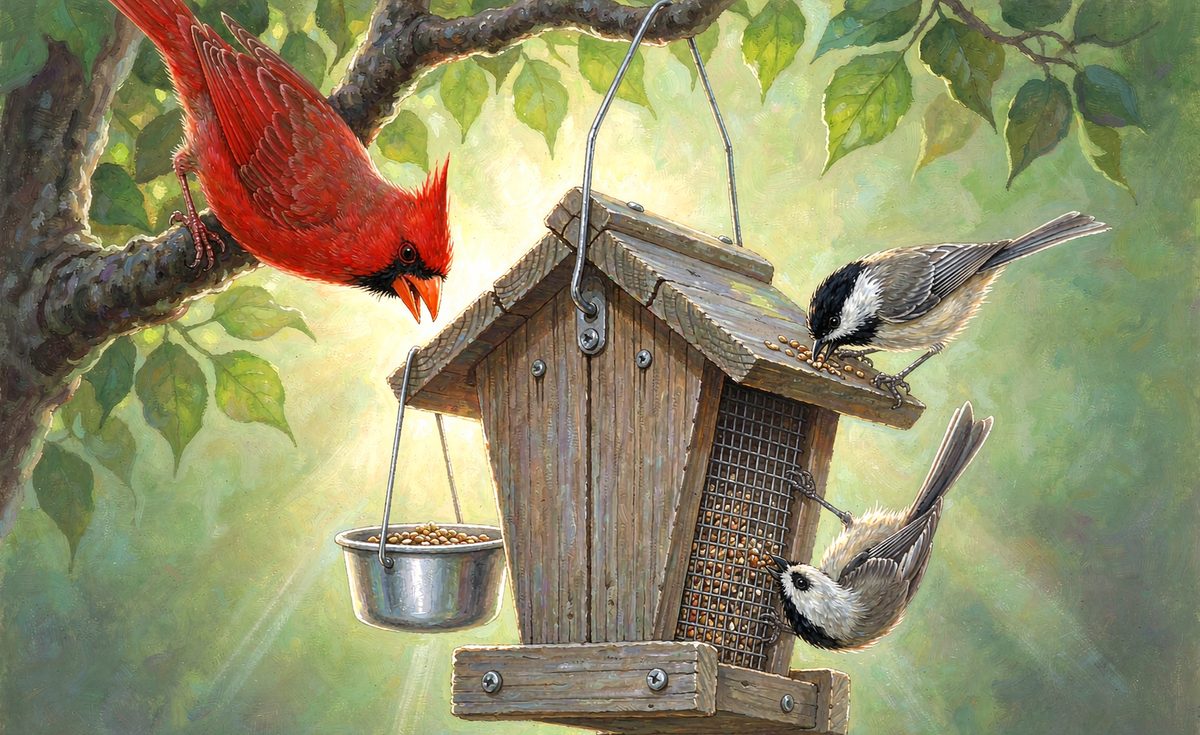
A hopper feeder holds several pounds of seed, has a roof that keeps seed dry, and — critically — gives birds a stable platform to land. That stable perch is why cardinals, jays, and grosbeaks will use it, not just chickadees and finches. Choose a metal body over plastic: squirrels and the weather both destroy thin plastic in a season or two.
Watch out for: hoppers are squirrel magnets and spill seed from the tray. Add a pole-mounted baffle (a dome below the feeder) from day one, and clear wet clumped seed regularly.
See hopper feeders on Amazon →Squirrel-proof pick: a weight-activated tube
Weight-activated tube feeder (Brome Squirrel Buster style)
If squirrels emptied your last feeder in a weekend, this is the answer. Weight-activated feeders close their feeding ports under a squirrel's weight but stay open for birds. The best-known line is Brome's Squirrel Buster, and for good reason: the housing is chew-proof metal, and the mechanism is genuinely effective — a determined squirrel gets frustrated, not fed.
Watch out for: the premium price is real, and larger models are heavy. Also, weight-activated feeders only stop squirrels; they do nothing for raccoons, which can still pry them open at night.
See Squirrel Buster feeders →Budget pick: a simple tube feeder
Tube feeder with metal ports
A tube feeder is the cheapest way to start, and it targets smaller clinging birds — chickadees, finches, titmice, nuthatches. Look for metal feeding ports (squirrels chew plastic ports) and a removable base so you can actually clean the inside. Keep it simple: black-oil sunflower or a sunflower mix.
Watch out for: the very cheapest tubes have fixed bases that trap wet seed and grow mold. Spend $5 more for a removable base and you'll replace it far less often.
See tube feeders on Amazon →The one decision that matters more than the feeder
Birds come for the food, not the hardware. Black-oil sunflower seed is the single most universal food you can offer — it has a high oil content birds need and a thin shell almost every species can crack. Skip the cheap mixed bags with milo and red millet; most of it ends up on the ground uneaten. For a deeper dive, read our bird seed guide.
FAQ
Which feeder gets the most birds?
A platform or hopper feeder with black-oil sunflower. The wider, more stable the landing surface, the more species (especially larger ones like cardinals) will use it.
Should I get one big feeder or two small ones?
Two different types beat one big one. A hopper (for cardinals and jays) plus a tube (for finches and chickadees) covers more species than either alone, and lets you offer two foods.
How often should I clean a bird feeder?
At least every two weeks in warm weather, more often in rain or heat. Wet, moldy seed spreads disease. Empty, scrub, and dry thoroughly before refilling.
Ready to narrow it down? Use our 5-question buying guide →